Homeowners Guide to Stone Foundation Waterproofing in NEPA
If you own a home in Scranton, Wilkes-Barre, or the Poconos, you are likely well-acquainted with the charm—and the challenges—of a historic fieldstone foundation. These structures were built by master craftsmen using local river stone and glacial rock, designed to support massive timber-framed homes for centuries.
However, they weren’t designed with a modern “dry basement” lifestyle in mind. In the Northeast Pennsylvania climate, where heavy spring rains follow deep winter freezes, these old stone walls often become a sieve for groundwater.
If you are tired of a damp, musty basement, here is the expert guide on how to properly waterproof a stone foundation without damaging the structural integrity of your historic home.
1. The Deadly Mistake: Portland Cement vs. Lime Mortar
The single most common mistake we see in NEPA basements is the use of modern Portland cement to “patch” or “parge” old stone walls.
The Science: Fieldstone foundations were built using lime mortar. Lime is a “breathable” and flexible material. It allows moisture to wick through the wall and evaporate into the air. Modern Portland cement, however, is incredibly hard and completely waterproof.
When you slap a layer of modern cement over an old stone wall, you trap moisture inside the stones. Because that water has nowhere to go, it sits behind the cement layer. When the temperature drops during a PA winter, that trapped water freezes and expands, causing the stones to flake (spalling) and the original mortar to turn to dust.
Expert Tip: If you are repointing your stone walls, you must use a lime-based mortar. It preserves the “breathing” nature of the foundation while keeping the structure stable.
2. Understanding the “NEPA Squeeze”: Hydrostatic Pressure
Why does the water come in so aggressively? The answer lies in the geography of the Susquehanna River Valley and the surrounding mountains.
Our region is famous for its heavy clay soil. Clay acts like a giant sponge; it absorbs water and expands. During a heavy downpour or a rapid snowmelt, the soil around your home becomes saturated. This creates hydrostatic pressure—literally thousands of pounds of water weight pushing against your foundation.
Since stone foundations are held together by gravity and mortar, they have thousands of tiny “micro-channels.” The pressure eventually wins, forcing water through the walls and even up through the floor.
3. The Only Permanent Fix: Interior Drainage Systems
Exterior waterproofing—digging a trench around your entire house—is often impossible or prohibitively expensive for historic NEPA homes due to porches, sidewalks, and narrow property lines.
The gold standard for these homes is a professionally installed Interior Drainage System.
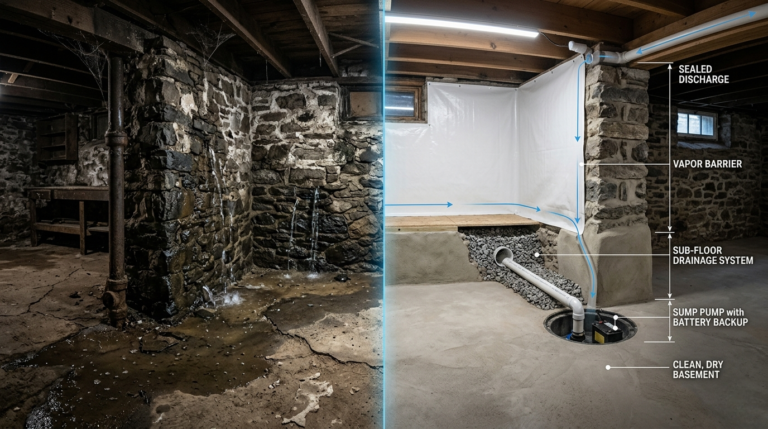
- Sub-Floor Perforated Drains: We install a specialized drainage track beneath the perimeter of your basement floor. This “catches” the water the moment it enters the wall or the floor-wall joint.
- The Sump Pump MVP: This water is then funneled to a high-capacity sump pump basin. In areas like Lackawanna and Luzerne Counties, power outages are common during storms. A high-quality system must include a battery backup to ensure your basement stays dry even when the lights go out.
4. Taming the “Basement Smell” with Vapor Barriers
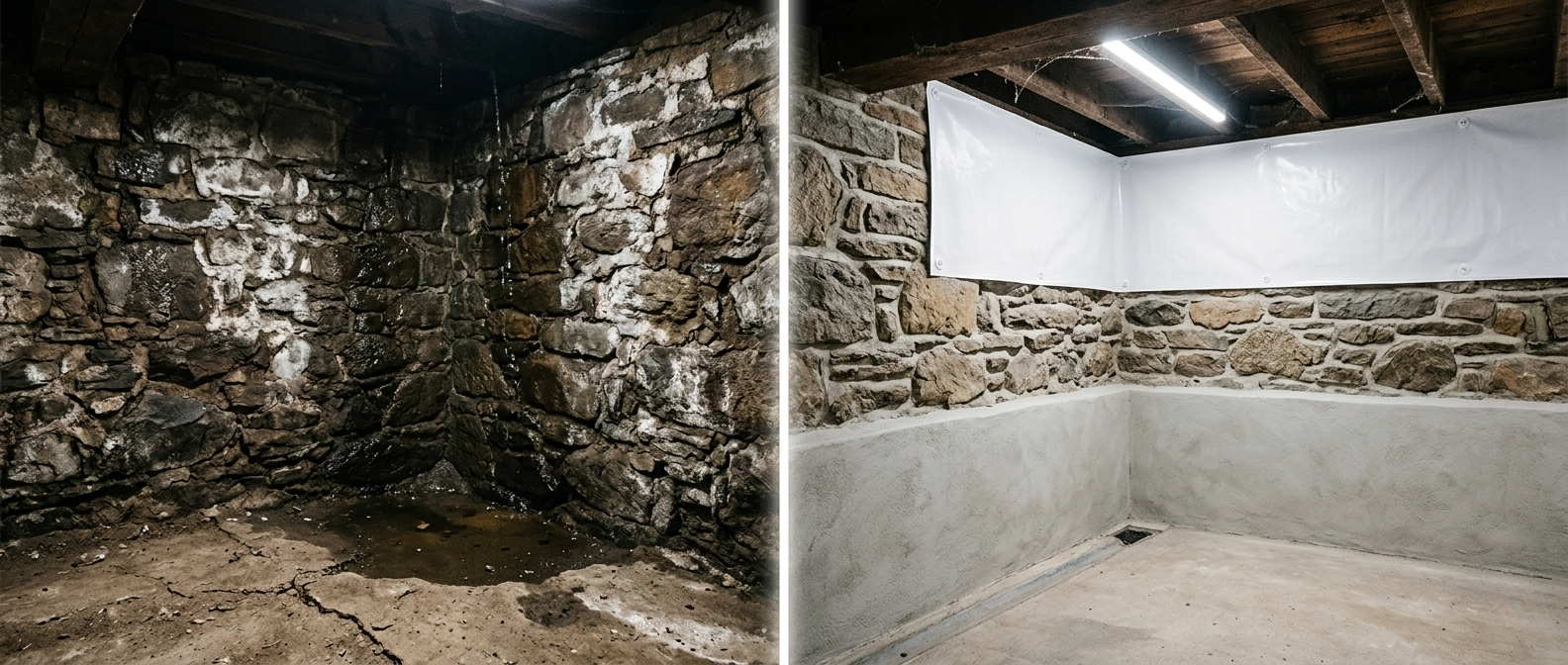
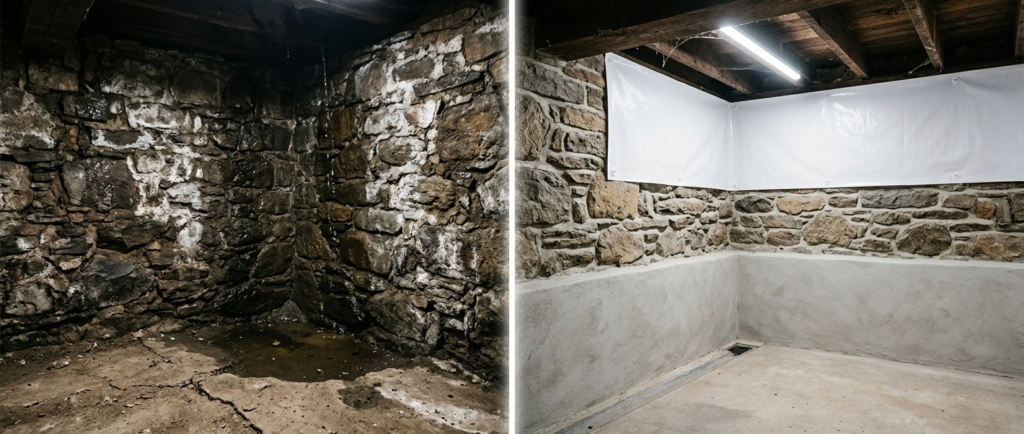
Even if you don’t see standing water, a stone foundation is constantly “sweating.” This vapor is what creates that classic, musty “old basement smell” and leads to mold growth on your storage boxes or wooden joists.
To turn a dingy stone basement into a usable space (like a workshop or gym), we recommend a high-mil vapor barrier.
- This is a heavy-duty, reinforced plastic liner mechanically fastened to the stone walls.
- It stops moisture from turning into humidity.
- It directs any seepage behind the liner straight into your drainage system.
5. The “Free” Fixes: Gutters and Grading
Before investing in a major system, every NEPA homeowner should do a walk-around of their property. You would be surprised how many “foundation leaks” are actually just drainage failures.
Clean Your Gutters
With our abundance of maple and oak trees, gutters in PA clog fast. An overflowing gutter drops hundreds of gallons of water directly at the base of your stone foundation.
Extend Your Downspouts
A downspout that ends at the corner of your house is just a funnel for your basement. Ensure all downspouts discharge at least 10 feet away from the foundation.
Check the Grading
Walk your perimeter. If the ground slopes toward the house, you are fighting a losing battle. A simple afternoon of moving topsoil to create a gentle slope away from the home can reduce your basement water intake by 20% or more.
Conclusion: Respect the Stone
A stone foundation isn’t a liability; it’s a testament to the history of Northeast Pennsylvania. However, it requires a specialized approach that respects the materials while using modern engineering to keep the water at bay.
Don’t settle for “damp and dingy” for another season. If you are ready to reclaim your basement and protect your home’s value, let the experts at NEPA Dry Basement give you a clear, honest assessment.
Ready for a Permanent Solution?
We offer Free, No-Obligation Inspections for homeowners in Scranton, Wilkes-Barre, and across the Poconos.